Rogozhin (4,6) Machine
Rogozhin's 4-state, 6-symbol universal Turing machine (1996), running on a self-growing tape.
Rogozhin's (4,6) universal machine as a true Turing machine. Four states A–D over a six-symbol alphabet drive the head across a bidirectional, self-growing tape. Rogozhin's family of small universal machines pinned down how few states and symbols a universal Turing machine needs; this scenario runs that machine's exact transition table on a plain, un-encoded input so the six-symbol dynamics are visible step by step.
The largest transition table in the Turing set — four states by six symbols — and a stress test of the modelling pattern at width. The same self-growing tape that carries a two-symbol machine carries a six-symbol one unchanged; only the head's table grows. We make no claim that this input drives a specific universal computation — it is the well-defined initial condition on which the authentic dynamics are shown.
Linked tables with guaranteed referential integrity.
Generated REST endpoints. Also exposed as MCP tools.
OSI-compatible definition, emitted with the dataset.
# rogozhin-46.osi.yaml — emitted automatically
semantic_model:
  name: "rogozhin-46"
  source: "duckdb://rogozhin-46.db"
  entities:
    - name: cell
      primary_key: id
  dimensions:
    - name: state
      type: categorical
    - name: t
      type: time
  measures:
    - name: row_count
      agg: count
    - name: active
      agg: sum
      filter: "state = 'ACTIVE'"
More worlds.
 ▶ REPLAY
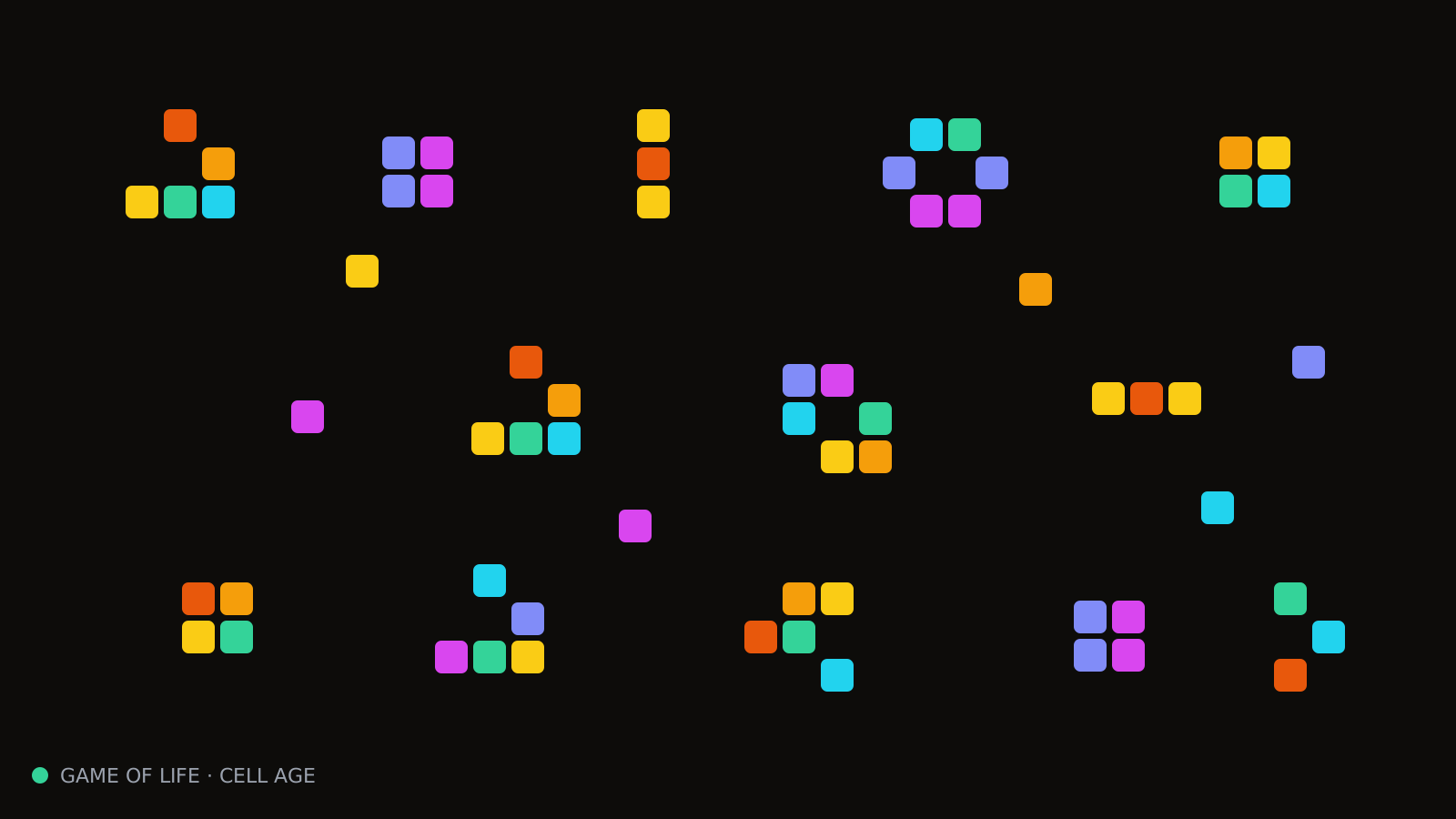
 Game of Life
Conway's automaton as a perfectly observable, deterministic grid world.
 ▶ REPLAY
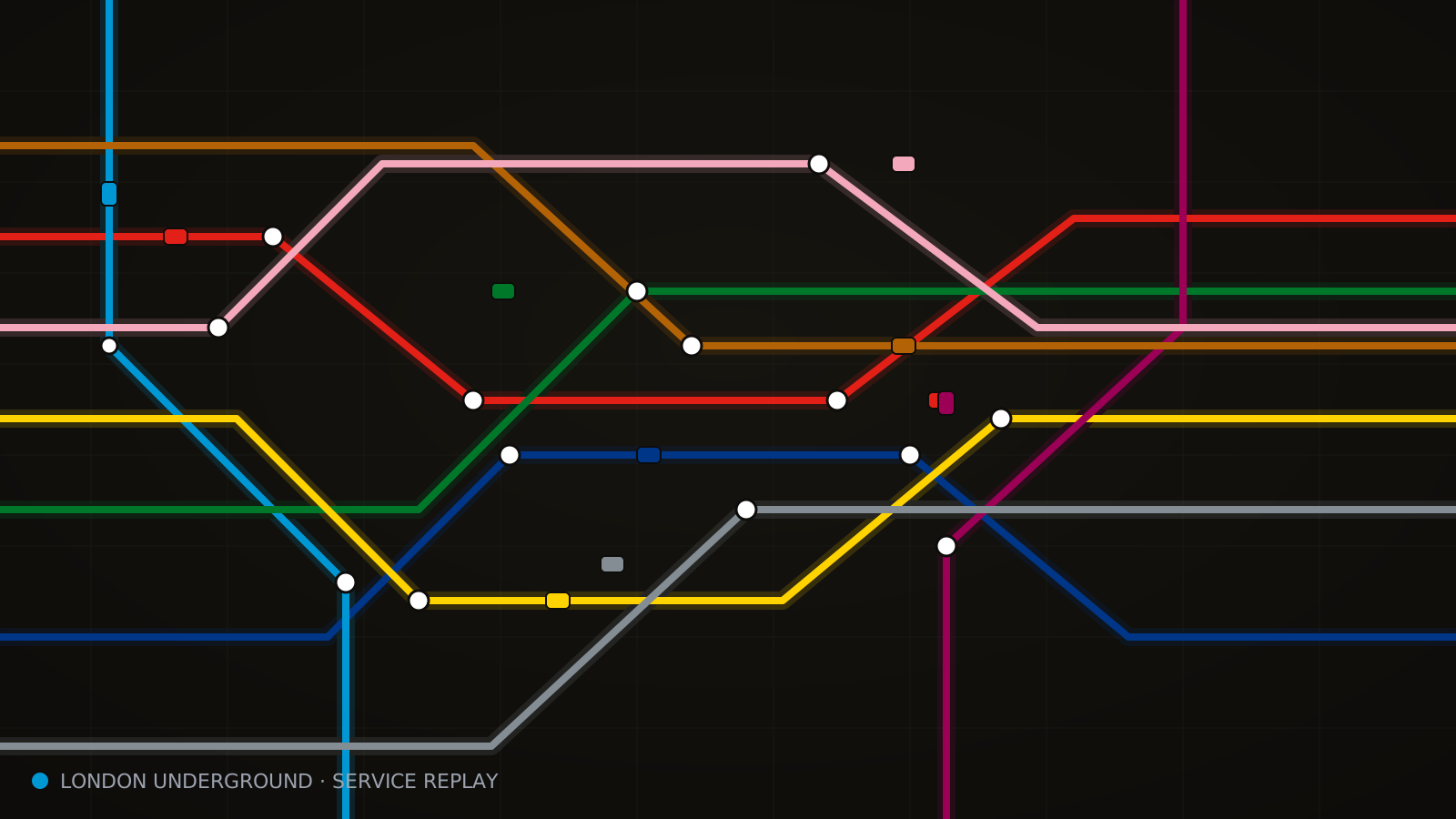
 London Underground
A live tube graph — eleven lines, hundreds of trains, platforms held as a mutex.
 ▶ REPLAY
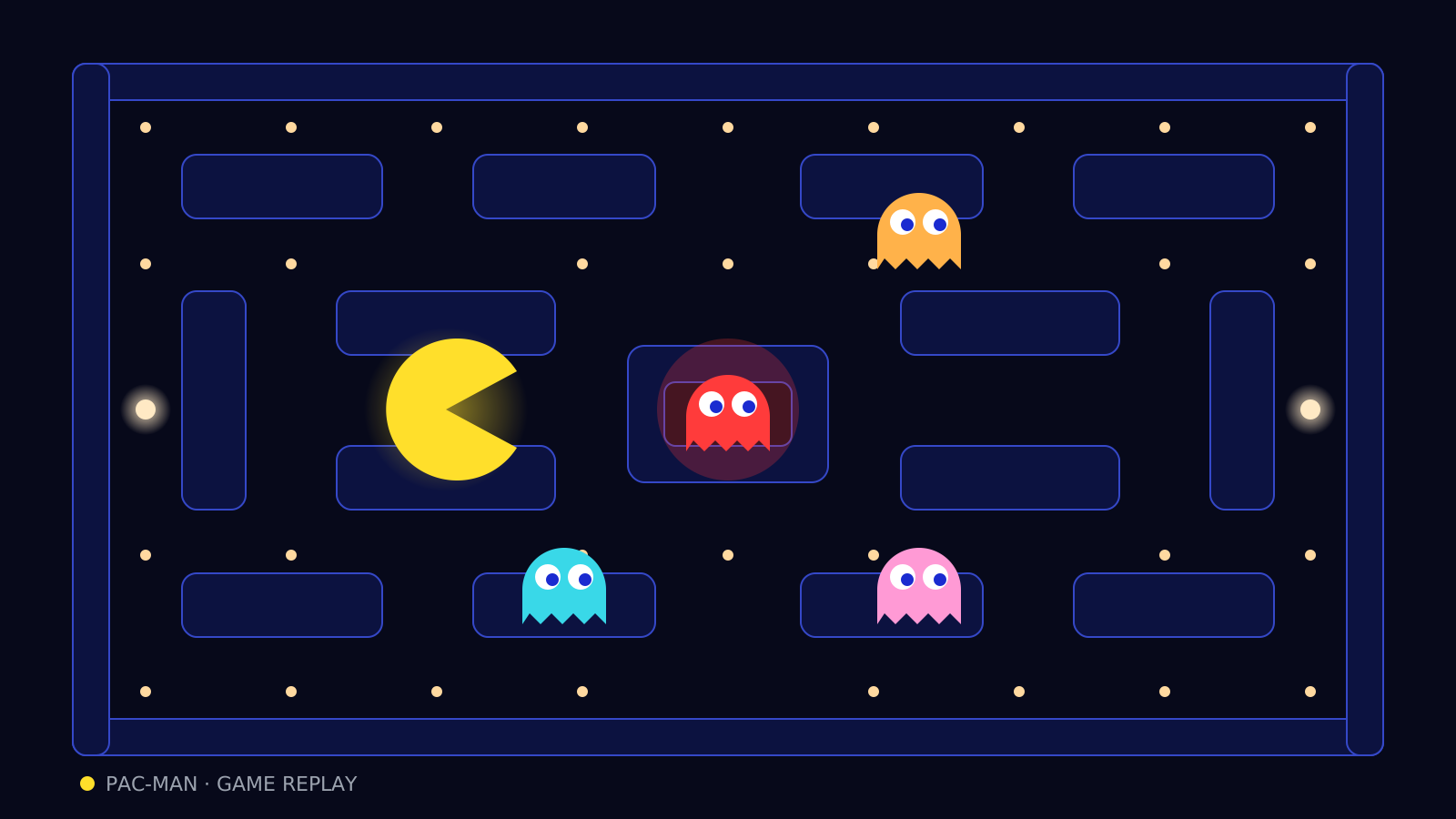
 Pac-Man
A self-playing arcade game — ghosts chase a flood-filled distance field.